2001 War in Afghanistan

AH-64 Apache Attack Helicopter in the 2001 War in Afghanistan

U.S. and British Apache attack helicopters were used in Afghanistan for fire support, armed escort, reconnaissance, tactical strike, and force protection for coalition ground and air operations.

Evidence Map

ClaimSources
AH-64 Apache helicopters provided fire support during Operation Anaconda in March 2002.

Sources: CMH Operation Enduring Freedom

U.S. AH-64 crews provided escort, evacuation security, and fire support for ground forces in eastern Afghanistan in 2010 and 2011.

Sources: Army Aviators Earn Valor Awards, Army Aviators Receive Valor Awards

British Army Air Corps Apache helicopters operated in Afghanistan from 2006 under Operation Herrick for ground support, tactical strike, reconnaissance, and armed escort.

Sources: UK MOD Apache 50000 Hours

A U.S. Apache crew engaged enemy fighting positions during a December 5, 2015 extraction mission in Afghanistan.

Sources: Army Heisler Nininger Award

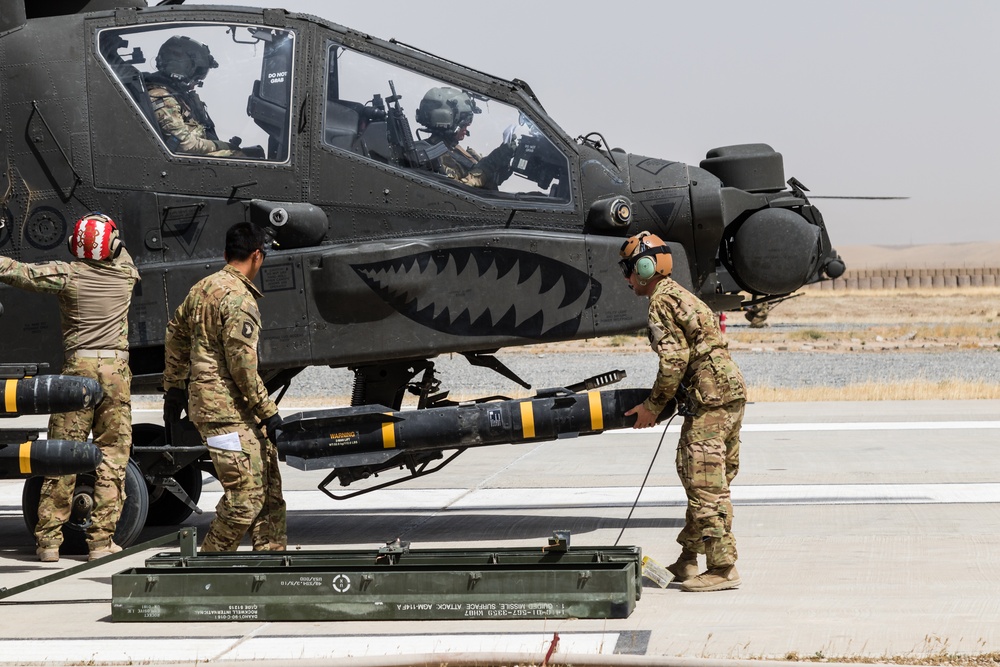
U.S. Army AH-64E aircraft were fielded armed with AGM-114 Hellfire missiles in Kunduz in 2017.

Sources: DVIDS Loading Hellfire in Kunduz

Timeline

AH-64 Apache attack helicopter In 2001 War in Afghanistan

  1. Apache fire support during Operation Anaconda

    The U.S. Army Center of Military History records Apache pilots from 3rd Battalion, 101st Aviation providing fire support for U.S. troops in the Shahi Kot during the opening day of Operation Anaconda.

    Sources: CMH Operation Enduring Freedom

  2. British Apache operations begin under Operation Herrick

    The UK Ministry of Defence reported that British Army Apache helicopters had been conducting operations in Afghanistan since 2006 after deploying with 16 Air Assault Brigade.

    Sources: UK MOD Apache 50000 Hours

  3. AH-64 crews support isolated platoon in Watahpur Valley

    U.S. Army reporting on valor awards identified AH-64 Apache pilots from B Company, 1-10 Aviation, TF Six Shooters providing security for casualty evacuation and an isolated platoon under fire in the Watahpur Valley.

    Sources: Army Aviators Earn Valor Awards

  4. Apache pilots support Do Ab air assault

    U.S. Army accounts describe AH-64 pilots providing security for an air infiltration at Do Ab in Nuristan Province and using fire support as Taliban fighters threatened the district center.

    Sources: Army Aviators Earn Valor Awards, Army Aviators Receive Valor Awards

  5. UK reports 50,000 Apache operational hours in Afghanistan

    The UK Ministry of Defence said British Army Air Corps Apache helicopters had flown their 50,000th operational hour in Afghanistan.

    Sources: UK MOD Apache 50000 Hours

  6. Apache crew protects Rangers and Chinooks during extraction

    A U.S. Army account of Capt. Lindsay Heisler's Distinguished Flying Cross action describes an Apache crew engaging enemy fighting positions while protecting Rangers and inbound Chinook helicopters during a night extraction in Afghanistan.

    Sources: Army Heisler Nininger Award

  7. AH-64E documented armed in Kunduz

    DVIDS imagery shows U.S. Army soldiers loading an AGM-114 Hellfire missile on an AH-64E Apache in Kunduz while supporting U.S. Forces Afghanistan, Operation Freedom's Sentinel, and the Resolute Support Mission.

    Sources: DVIDS Loading Hellfire in Kunduz

Documented Use

Direct proof of use

The AH-64 Apache is directly documented in Afghanistan from the early conventional phase of the war through later counterinsurgency and advisory operations. The U.S. Army Center of Military History describes Apache pilots from 3rd Battalion, 101st Aviation providing fire support during Operation Anaconda in March 2002, while later U.S. Army award accounts document AH-64 crews supporting air assaults, casualty evacuation security, and ground forces under fire in eastern Afghanistan.

British Army Air Corps Apache helicopters were also deployed under Operation Herrick. The UK Ministry of Defence said in April 2014 that British Apaches had been conducting operations in Afghanistan since 2006 and were used for support to ground forces, tactical strike, reconnaissance, and armed escort to other helicopters.

Sources: CMH Operation Enduring Freedom, Army Aviators Earn Valor Awards, Army Heisler Nininger Award, UK MOD Apache 50000 Hours

Timeline

Apache use in Afghanistan appears in dated sources across several phases of the conflict. In March 2002, AH-64s supported U.S. and coalition troops in the Shahi Kot during Operation Anaconda. By 2006, British Apache AH1 helicopters had begun Operation Herrick deployments, and by April 2014 the UK MOD reported 50,000 operational flying hours in Afghanistan.

U.S. Army accounts from 2010 and 2011 place AH-64 crews in close-support missions in Kunar, Nuristan, Khost, and other eastern Afghan locations. A 2015 U.S. Army account describes an Apache crew engaging enemy positions to protect Rangers and inbound Chinook helicopters during a night extraction.

Sources: CMH Operation Enduring Freedom, Army Aviators Earn Valor Awards, Army Aviators Receive Valor Awards, Army Heisler Nininger Award, UK MOD Apache 50000 Hours

Narrative

In Afghanistan, the Apache's documented role centered on armed overwatch and close fire support rather than independent strategic attack. During Operation Anaconda, Apache pilots delivered fire support for U.S. infantry in the Shahi Kot, and the same CMH account records additional AH-64 helicopters from 3rd Battalion, 101st Aviation being brought in as reinforcements.

Later U.S. Army accounts show Apache crews operating as escorts and close-support aircraft for ground forces and helicopter-borne missions. In 2011, award citations described AH-64 pilots providing security for a daytime air infiltration at Do Ab, supporting casualty evacuation and isolated platoons under fire, and using effective fires against Taliban fighters threatening coalition troops.

British Apache operations broadened the coalition record. The UK MOD described Apache helicopters as continuously deployed on Operation Herrick after their 2006 introduction to Afghanistan, with missions that included ground-force support, tactical strike, reconnaissance, and armed escort. DVIDS imagery from Kunduz in 2017 documents U.S. Army AH-64E aircraft armed with AGM-114 Hellfire missiles while supporting U.S. Forces Afghanistan under Operation Freedom's Sentinel and the Resolute Support Mission.

Sources: CMH Operation Enduring Freedom, Army Aviators Earn Valor Awards, UK MOD Apache 50000 Hours, DVIDS Loading Hellfire in Kunduz

Images

Conflict Context

U.S. Army soldiers load a Hellfire missile on an AH-64E Apache in Kunduz, Afghanistan
U.S. Army soldiers load an AGM-114 Hellfire missile on an AH-64E Apache helicopter in Kunduz, Afghanistan, May 31, 2017.

Sources: DVIDS Loading Hellfire in Kunduz

Sources