Air Defense

Anvil-K

Also known as
  • Anvil-Kinetic
  • Anvil Kinetic
  • Anduril Anvil
  • Anvil interceptor
  • Anvil kinetic interceptor

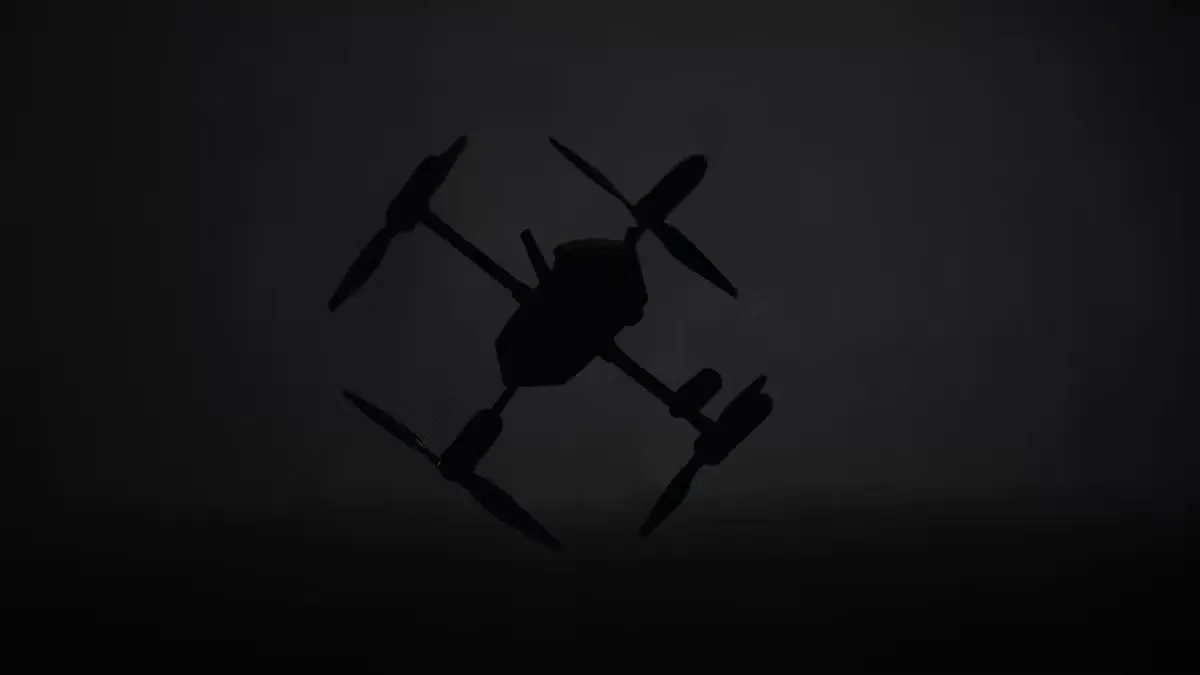
Anvil-K is Anduril Industries' kinetic Anvil counter-UAS interceptor, a high-speed quadcopter-class drone built to physically intercept Group 1 and Group 2 unmanned aircraft. Public sources distinguish it from the explosive Anvil-M variant and identify Anvil-Kinetic in Kuwait's proposed 2026 Anduril counter-drone procurement package.

Profile / Specs

Profile

Origin
United States
Type
Kinetic counter-UAS interceptor drone
Service note
2019-present counter-UAS interceptor family
Designer
Anduril Industries
Designed
Publicly announced in 2019; Anvil-M explosive variant unveiled in 2023
Produced
2019-present family; exact Anvil-K production quantities not publicly disclosed

Specifications

Mission
Autonomous kinetic interception of small unmanned aircraft
Target class
Group 1 and Group 2 UAS threats
Airframe
Electrically powered quadcopter interceptor
Defeat method
Direct physical impact using kinetic energy
Command and control
Cued and authorized through Anduril's Lattice command-and-control system
Launch integration
Launch Box and related counter-UAS architecture in Anduril reporting
Public procurement context
Named as Anvil-Kinetic in Kuwait's possible 2026 Anduril counter-UAS Foreign Military Sale
Variants

Public reporting uses Anvil for the baseline kinetic interceptor and Anvil-M for the munition-equipped explosive variant. The Kuwait sale notice names Anvil-Kinetic, shortened here as Anvil-K.

VariantConfigurationDesignation notes
Anvil-KineticKinetic-impact counter-UAS interceptor

The standard Anvil defeats target drones by direct physical impact rather than an explosive payload.

Sources: Janes Kuwait Anduril C-UAS sale, C4ISRNet Anvil-M unveiling

Anvil-MExplosive-payload counter-UAS interceptor

Anduril introduced Anvil-M as a detonating variant with a fire-control module and munition payload for Group 1 and Group 2 UAS threats.

Sources: C4ISRNet Anvil-M unveiling

Timeline

Anvil-K Key Events

  1. Anvil publicly announced

    Anduril publicly introduced the Anvil counter-drone system in 2019 as a kinetic interceptor for small drone threats.

    Sources: C4ISRNet Anvil-M unveiling

  2. Anvil-M explosive variant unveiled

    C4ISRNet reported Anduril's unveiling of Anvil-M, distinguishing the munition-equipped version from the original kinetic Anvil that rams targets.

    Sources: C4ISRNet Anvil-M unveiling

  3. Kuwait FMS package names Anvil-Kinetic

    U.S. State Department and defense-industry reporting listed Anvil-Kinetic with Roadrunner-Munition, Lattice, Sentry towers, Pulsar, Menace, launch boxes, and support equipment in Kuwait's possible counter-UAS sale.

    Sources: Breaking Defense Kuwait Anduril sale, Janes Kuwait Anduril C-UAS sale, MilitaryLeak Kuwait FMS report

Counter-UAS Architecture

Public information describes Anvil-K as one effector inside Anduril's wider counter-UAS system rather than as a standalone missile. The strongest sourced context links the interceptor to Lattice command and control, Launch Box launch equipment, Sentry sensor towers, Pulsar electronic warfare, and Roadrunner-M in a layered architecture.

Kinetic layer

Anvil-K physically intercepts smaller unmanned aircraft; Roadrunner-M covers a larger munition-equipped interceptor role in the same 2026 Kuwait package.

Control layer

Anduril and sale reporting place Lattice at the command-and-control layer used to cue or manage counter-UAS engagements.

Sourcing limit

The public sources support system identity, roles, and procurement context, but do not document a specific battlefield conflict-use row for Anvil-K.

Media
Related Weapon Systems
1L125 Niobium-SV, Mobile VHF three-coordinate air-defense surveillance radar, Air DefenseAir Defense1L125 Niobium-SVMobile VHF three-coordinate air-defense surveillance radarThe 1L125 Niobium-SV is a Russian mobile VHF/meter-band, three-coordinate radar built for ground-forces air defense and developed by NNIIRT within the Almaz-Antey group. Rosoboronexport's 1L125E export profile describes a 5-500 km, 360-degree surveillance radar for detecting, tracking, identifying, and reporting aerodynamic and ballistic targets, including low-observable aircraft; Ukrainian and sanctions-derived records identify Niobium-SV radars in Russian service during the Russia-Ukraine war.
1L13-3 Nebo-SV, Mobile VHF two-coordinate air-surveillance radar, Air DefenseAir Defense1L13-3 Nebo-SVMobile VHF two-coordinate air-surveillance radarThe 1L13-3 Nebo-SV is a Soviet/Russian mobile meter-band radar for ground-forces air defense, built to search for aircraft, helicopters, UAVs, and other air targets and pass range-and-bearing data to command posts or missile batteries. It is a two-coordinate predecessor to the 1L119 Nebo-SVU: sources describe it with a 72-element VHF antenna array, separate IFF interrogator, six-person crew, and fighter-target detection figures reaching roughly 350 km at high altitude.
2K11 Krug / SA-4 Ganef, Tracked medium-range surface-to-air missile system, Air DefenseAir Defense2K11 Krug / SA-4 GanefTracked medium-range surface-to-air missile systemThe 2K11 Krug, NATO reporting name SA-4 Ganef, is a Soviet tracked medium-range surface-to-air missile system built around 2P24 launchers, 3M8-series missiles, and separate acquisition and guidance radars. In the 2020 Nagorno-Karabakh war it appeared on the Armenian and Artsakh side as legacy area air defense, but reporting from CSIS and Oryx shows it was vulnerable in a battlespace dominated by Azerbaijani UAVs and loitering munitions.

Sources